
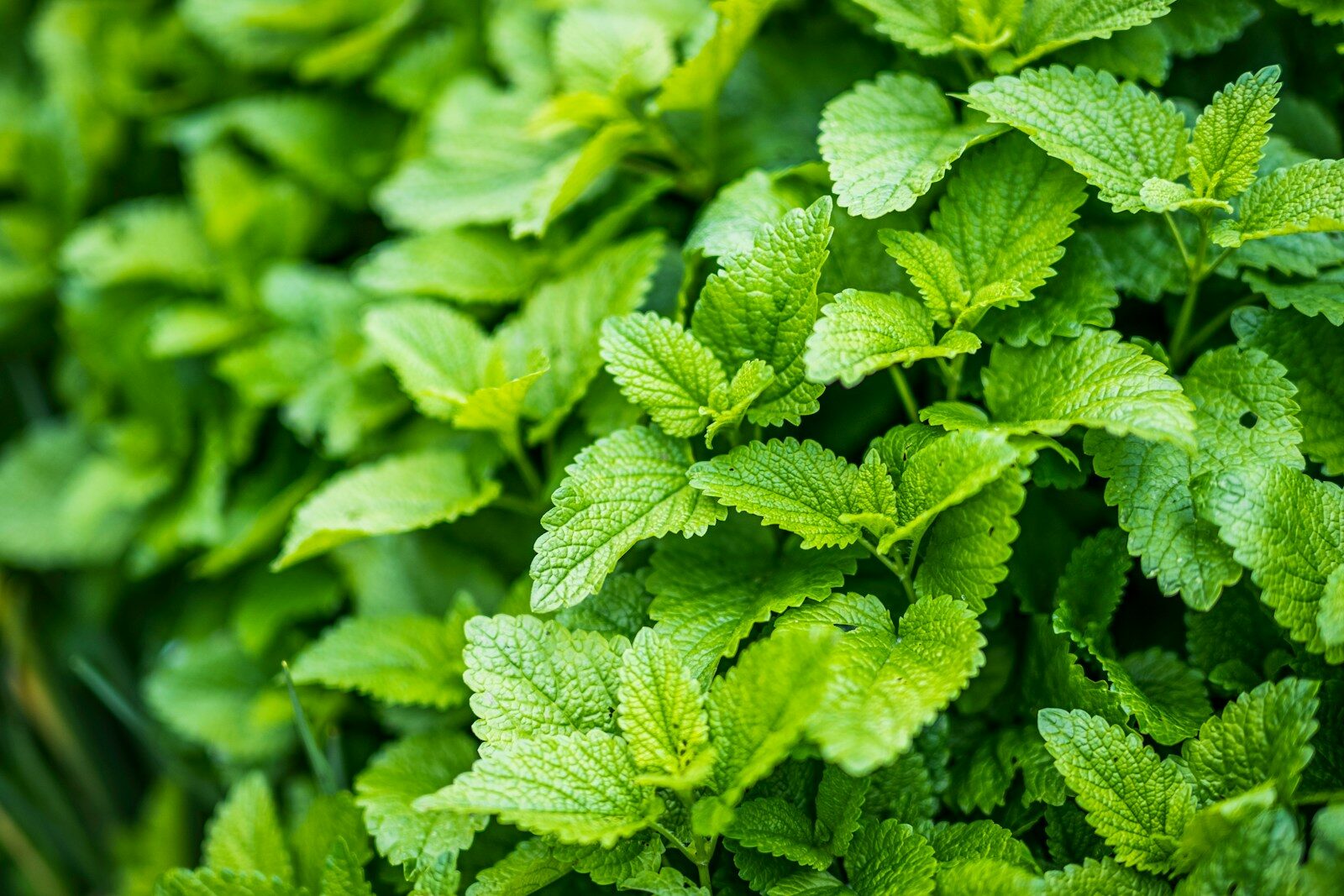
I pretty much love anything with a lemon taste and smell, and lemon balm is no exception. This lemony leaf smells amazing and tastes pretty good in my tea. Not just as a throw-in to my tea, but as a star ingredient when making an herbal tea with the dried leaves. As with any herb, it has its benefits in moderation.
Health Benefits
The four main health benefits of lemon balm are that it can help with anxiety, reduce stress, alleviate indigestion, and treat nausea. Whether taking lemon balm in capsule form, as a powder, or using loose leaves, follow the instructions for use. There is too much of a good thing, so take note of the side effects. Coincidentally, the side effects include some of the same symptoms that lemon balm is known to treat. Those include headache, nausea, stomach pain, skin irritation, and allergic reaction.
References: Healthline, WebMD
Uses
Although there are many medicinal uses, the way I prefer to use lemon balm is to either freeze fresh leaves in cubes for iced tea, or use the dried leaves to steep for hot tea. Lemon balm can also be used to make bug spray, soap, balms, candles, and essential oils.
Did you know…
Lemon balm is part of the mint family. The little white flowers attract bees, which is why lemon balm, genus Melissa, is called “honey bee” in Greek, melissóphyllon (bee leaf). Lemon balm has a 2000-year medicinal history, with physicians using it to treat sadness and depression. So, when you are feeling down, try a nice lemon balm tea to boost your mood.
