
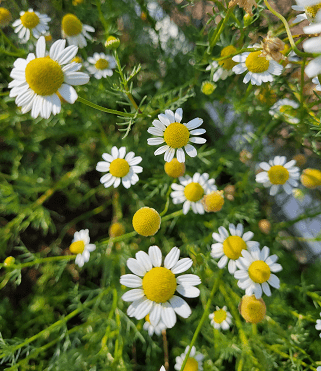
The first thing that comes to mind when I think about chamomile is Sleepy Time Tea. Although it really does not make me sleepy. But my favorite trait of the chamomile plant is that it is from the daisy family and looks like tiny little daisies. Daisies are my happy flower. This year was the first year that I not only added daisies outside the garden, but I also planted chamomile within the garden. And I do have to say, I kind of overcommitted to the amount I planted. The chamomile seeds are so tiny. They all kind of poured out of the packaging when I went to plant them. I call this serendipity. Even though most are not quite in a flower state, I love that I will have lots of them.
Health Benefits
Chamomile is rich in antioxidants that help prevent cellular damage. And, I hate to sound like a broken record with this herb, but just like most herbs, chamomile helps with digestion, inflammation, pain relief, and congestion. Chamomile is also known to help with menstrual cramps. Where was this information when I was younger? T.M.I? …okay, maybe a little.
Uses
As you probably guessed, chamomile is most used in tea. This flower has a sweet, fruity floral note. Some compare it to the sweetness of honey and the taste of an apple. I did recently make a tea with chamomile, but since I also included many other herbs, all I could really taste was lavender and thyme. I will try it again with a simple chamomile and lemongrass tea and see what happens.
I did come across a site called “The Herbal Academy” that lists 23 ways to use chamomile. From culinary uses to healing, this versatile herb has many medicinal uses.
Did You Know…
Roman (or English) chamomile is sometimes used as a yellow dye. Check out Fibercurious on Natural dyeing the chamomile tutorial.
